PFAS in Texas Tap Water: What Businesses Should Know
If you’re a business owner in Texas, the quality of drinking water you provide to your employees matters more than ever. Recent findings of PFAS contamination in water systems across Dallas-Fort Worth, Austin, and San Antonio have raised serious concerns about the safety of our drinking water supply.
As “forever chemicals” continue making headlines, understanding what PFAS are, where they’re found in Texas, and how to protect your workplace has become essential for every business leader who cares about employee health and safety.
What Are PFAS (Forever Chemicals)?
PFAS stands for per- and polyfluoroalkyl substances, a family of more than 12,000 synthetic chemicals that have been manufactured since the 1940s. These chemicals earned the nickname “forever chemicals” because they don’t break down naturally in the environment or in the human body.
PFAS have been used in countless industrial applications and consumer products because of their resistance to heat, water, and oil. You’ll find them in:
- Non-stick cookware
- Water-resistant clothing and fabrics
- Food packaging materials
- Firefighting foam (AFFF)
- Industrial manufacturing processes
- Stain-resistant carpets and upholstery
The problem is that these same properties that make PFAS useful in manufacturing also make them incredibly persistent. Once released into the environment, PFAS can contaminate soil, groundwater, and drinking water sources for decades or even centuries. They accumulate in our bodies over time, with studies showing that PFAS are now detectable in the blood of nearly all Americans.
PFAS in Texas: How Bad Is It?
Texas has not been spared from PFAS contamination. Recent testing has revealed concerning levels of these forever chemicals in water systems across our major metropolitan areas.
In the Dallas-Fort Worth area, multiple water utilities have detected PFAS compounds in their drinking water sources. The Trinity River, which serves as a major water source for North Texas, has shown PFAS contamination linked to industrial sites and military installations where firefighting foam was used for training exercises. Several Tarrant County and Dallas County water systems have reported detectable levels of PFOA and PFOS, the two most studied PFAS compounds.
Austin faces similar challenges. The Colorado River and local aquifers that supply the city’s drinking water have tested positive for various PFAS compounds. The presence of industrial facilities, former manufacturing sites, and urban runoff has contributed to contamination in Central Texas watersheds.
San Antonio, which relies heavily on the Edwards Aquifer, has also grappled with PFAS detection. While the aquifer’s natural filtration provides some protection, surface water sources and certain wells have shown measurable PFAS levels, particularly in areas near military bases and industrial zones.
The reality is that PFAS contamination is widespread across Texas. A 2023 study found that approximately 60% of Texas public water systems tested showed detectable levels of at least one PFAS compound. While many systems are below the EPA’s new regulatory limits, the presence of these chemicals at any level raises questions about long-term exposure risks.
Health Risks of PFAS Exposure
The health implications of PFAS exposure have become increasingly clear as more research emerges. Because these chemicals accumulate in the body over time, even low-level exposure through drinking water can pose risks.
Studies have linked PFAS exposure to several serious health conditions:
Cancer: Research has established connections between PFAS exposure and increased risk of kidney cancer, testicular cancer, and thyroid cancer. The International Agency for Research on Cancer has classified PFOA as “carcinogenic to humans.”
Immune System Effects: PFAS can suppress immune function, making people more susceptible to infections and reducing the effectiveness of vaccines. This has particular relevance in workplace settings where employee health directly impacts productivity and absenteeism.
Reproductive Issues: Studies show associations between PFAS exposure and reduced fertility, pregnancy complications, and developmental problems in children.
Liver Damage: PFAS accumulate primarily in the liver and blood, and research indicates they can cause elevated liver enzymes and other liver problems.
Thyroid Disease: PFAS interfere with thyroid hormone production, potentially leading to thyroid disorders that affect metabolism, energy levels, and overall health.
Cholesterol Increases: Multiple studies have found that PFAS exposure leads to increased cholesterol levels, contributing to cardiovascular disease risk.
For businesses, these health risks translate to real concerns about employee wellbeing, healthcare costs, and potential liability. Providing clean, PFAS-free drinking water isn’t just about compliance—it’s about protecting your team’s health.
New EPA Regulations for PFAS
In April 2024, the Environmental Protection Agency took a historic step by establishing the first-ever national drinking water standards for PFAS. These regulations represent a significant shift in how we approach water quality and safety.
EPA’s PFAS Drinking Water Standards: The new regulations set Maximum Contaminant Levels (MCLs) of 4 parts per trillion (ppt) for both PFOA and PFOS individually. For other PFAS compounds (PFNA, PFHxS, PFBS, and GenX), the EPA established a “hazard index” approach that requires water systems to monitor combinations of these chemicals.
These standards are among the strictest drinking water regulations ever issued. To put 4 parts per trillion in perspective, that’s equivalent to four drops of water in an Olympic-sized swimming pool.
Public water systems have until 2027 to comply with the new standards, which means they must:
- Monitor their water for PFAS compounds
- Notify the public if PFAS levels exceed the MCLs
- Take action to reduce PFAS levels if they exceed the limits
- Implement treatment solutions to ensure compliance
For Texas businesses, these regulations have important implications. While your municipal water supplier is responsible for meeting EPA standards, you don’t have to wait until 2027 to ensure your workplace has the cleanest possible drinking water. Many businesses are taking proactive steps to install point-of-use filtration systems that remove PFAS right at the tap.
How Businesses Can Protect Their Employees
As a business owner or facility manager in Dallas, Austin, or San Antonio, you have the power to take control of your workplace water quality today.
Here are practical steps you can take:
Know Your Water Source: Contact your municipal water supplier and request their latest PFAS testing results. Texas utilities are increasingly transparent about water quality data, and you have a right to know what’s in your water.
Install Point-of-Use Filtration: Rather than waiting for system-wide improvements, install advanced filtration directly where your employees access drinking water. This provides immediate protection and gives you control over water quality regardless of municipal source water variations.
Regular Testing: Consider periodic third-party water testing to verify that your filtration system is performing effectively. Independent lab testing can detect PFAS and other contaminants to ensure your water meets the highest standards.
Employee Education: Keep your team informed about water quality initiatives you’re implementing. Transparency builds trust and shows your commitment to their wellbeing.
Choose the Right Technology: Not all water filtration systems are created equal when it comes to PFAS removal. Understanding which technologies effectively remove forever chemicals is critical.
The investment in clean drinking water pays dividends in employee health, satisfaction, and productivity. It’s also a tangible demonstration that you prioritize your team’s wellbeing over cutting corners.
What to Look for in a Water Filtration System
When it comes to removing PFAS from drinking water, technology matters. Standard pitcher filters and basic carbon filters are not sufficient for PFAS removal—you need advanced filtration designed specifically to capture these persistent chemicals.
Reverse Osmosis (RO): This is the gold standard for PFAS removal. Reverse osmosis systems use a semi-permeable membrane with pore sizes as small as 0.0001 microns to filter out PFAS molecules. Studies show that properly maintained RO systems can remove 90-99% of PFAS compounds from water.
Activated Carbon Filtration: While not as effective as RO on its own, activated carbon (particularly granular activated carbon or GAC) can adsorb certain PFAS compounds when used as part of a multi-stage system. Carbon filtration works best when combined with other technologies.
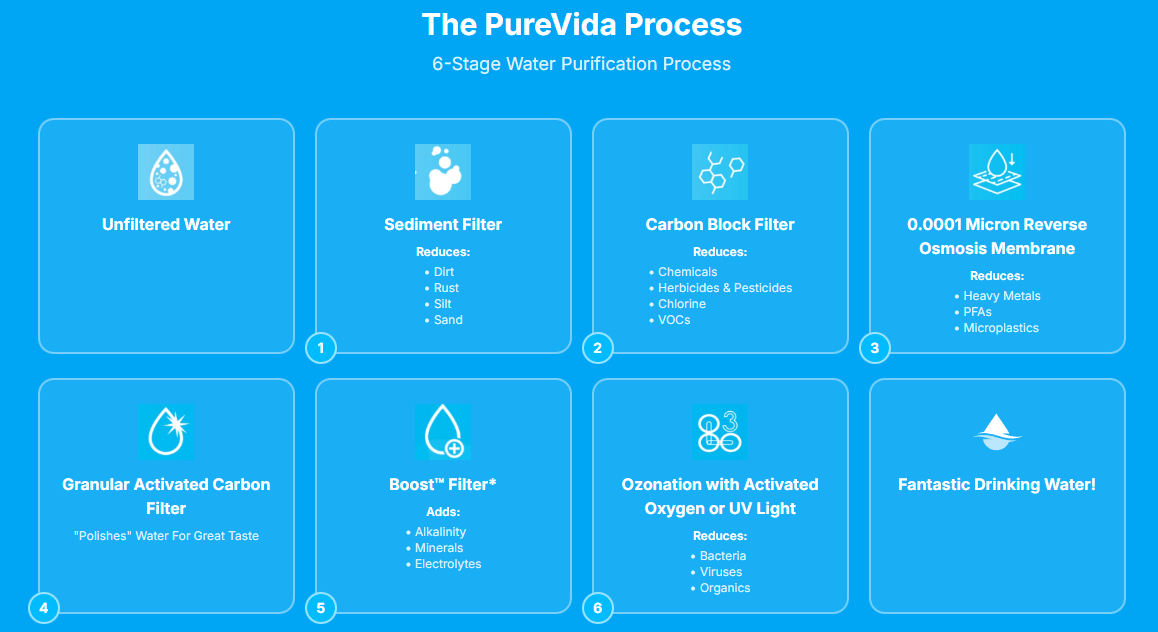
Multi-Stage Filtration: The most effective approach combines multiple filtration technologies in sequence:
- Sediment filtration removes larger particles and protects downstream filters
- Carbon block filtration removes chlorine, taste, and odor compounds while capturing some PFAS
- Reverse osmosis membrane (0.0001 micron) provides the critical PFAS removal barrier
- Post-filtration with granular activated carbon polishes the water and removes any residual taste
- Optional UV or activated oxygen treatment provides additional purification and prevents bacterial growth
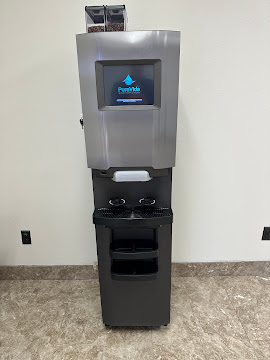
PureVida Water Technologies’ bottle-less water coolers incorporate this exact multi-stage approach, combining sediment filtration, carbon block, a 0.0001 micron reverse osmosis membrane, granular activated carbon, a boost filter, and activated oxygen treatment. This comprehensive system is specifically designed to remove PFAS and other contaminants while delivering clean, great-tasting water.
Certification Matters: Look for systems that have been tested and certified by independent organizations like NSF International for PFAS reduction. NSF/ANSI Standard 53 and Standard 58 address PFAS removal, and certified systems must demonstrate proven performance.
Maintenance is Critical: Even the best filtration system requires regular maintenance to remain effective. Filters must be changed according to manufacturer specifications, and membranes need periodic replacement. With PureVida’s subscription service model, all maintenance is included in your flat monthly rate—our technicians handle filter changes, system checks, and preventive maintenance so you never have to worry about whether your water is safe.
When comparing water solutions for your business, the choice becomes clear: bottled water delivery cannot address PFAS contamination in your existing tap water, and it generates massive plastic waste. Bottle-less systems with advanced filtration provide comprehensive protection at the point of use, eliminating PFAS before anyone drinks the water.
Protecting Your Texas Business with Clean Water
PFAS contamination in Texas drinking water is a serious issue that’s not going away. As regulations tighten and awareness grows, businesses that take proactive steps to ensure clean drinking water will be ahead of the curve.
At PureVida Water Technologies, we’ve been helping Texas businesses provide safe, great-tasting water to their employees for years. Our bottle-less water systems deliver comprehensive PFAS removal through advanced multi-stage filtration, all backed by our complete service and maintenance program.
Whether you’re in the Dallas-Fort Worth Metroplex, the Austin area, or San Antonio, we can help you eliminate PFAS concerns from your workplace. Our flat monthly subscription rate includes equipment, installation, unlimited filtered water, all filter changes, and ongoing service—no surprises, no hassles.
Ready to protect your team from PFAS? We offer Free, No-Obligations Trials so you can experience the PureVida difference risk-free. Contact us today to schedule a water quality assessment and learn how bottle-less filtration can deliver clean, safe drinking water for your business.
Your employees deserve water they can trust. Let’s make it happen.
Ready to Try Bottle-less?
PureVida installs, maintains, and services everything. Free, no-obligation trial for Texas businesses.